Study Sites

AQUEDUCT Study Site – Tensift Basin (Morocco)

Site Overview

The Tensift Basin study site is a major Mediterranean semi-arid observatory within the AQUEDUCT project. It represents a complex hydrological system combining mountain water production zones, irrigated plains, and groundwater-dominated areas. The site is particularly suitable for integrated water accounting across multiple spatial scales and water-management contexts.
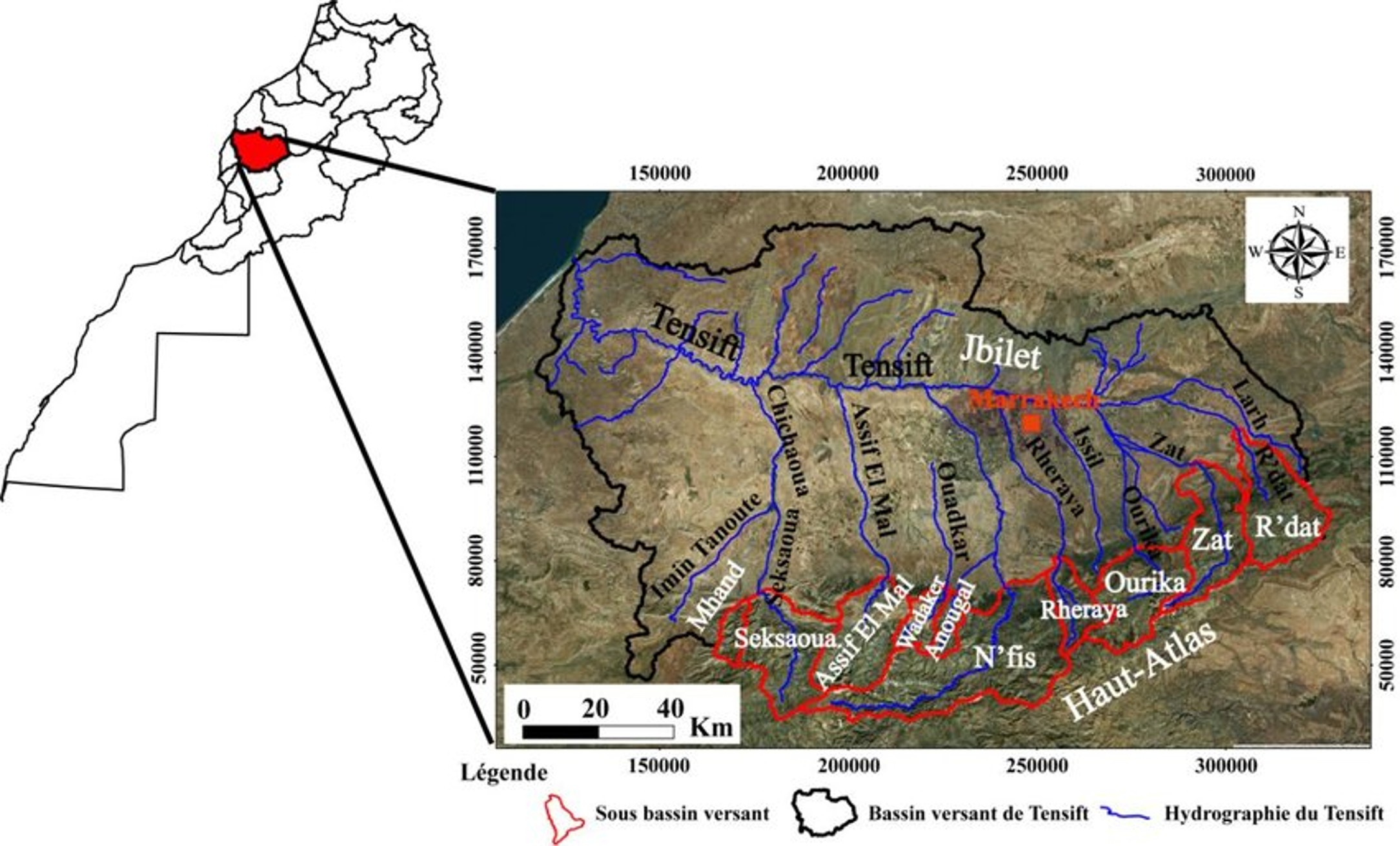
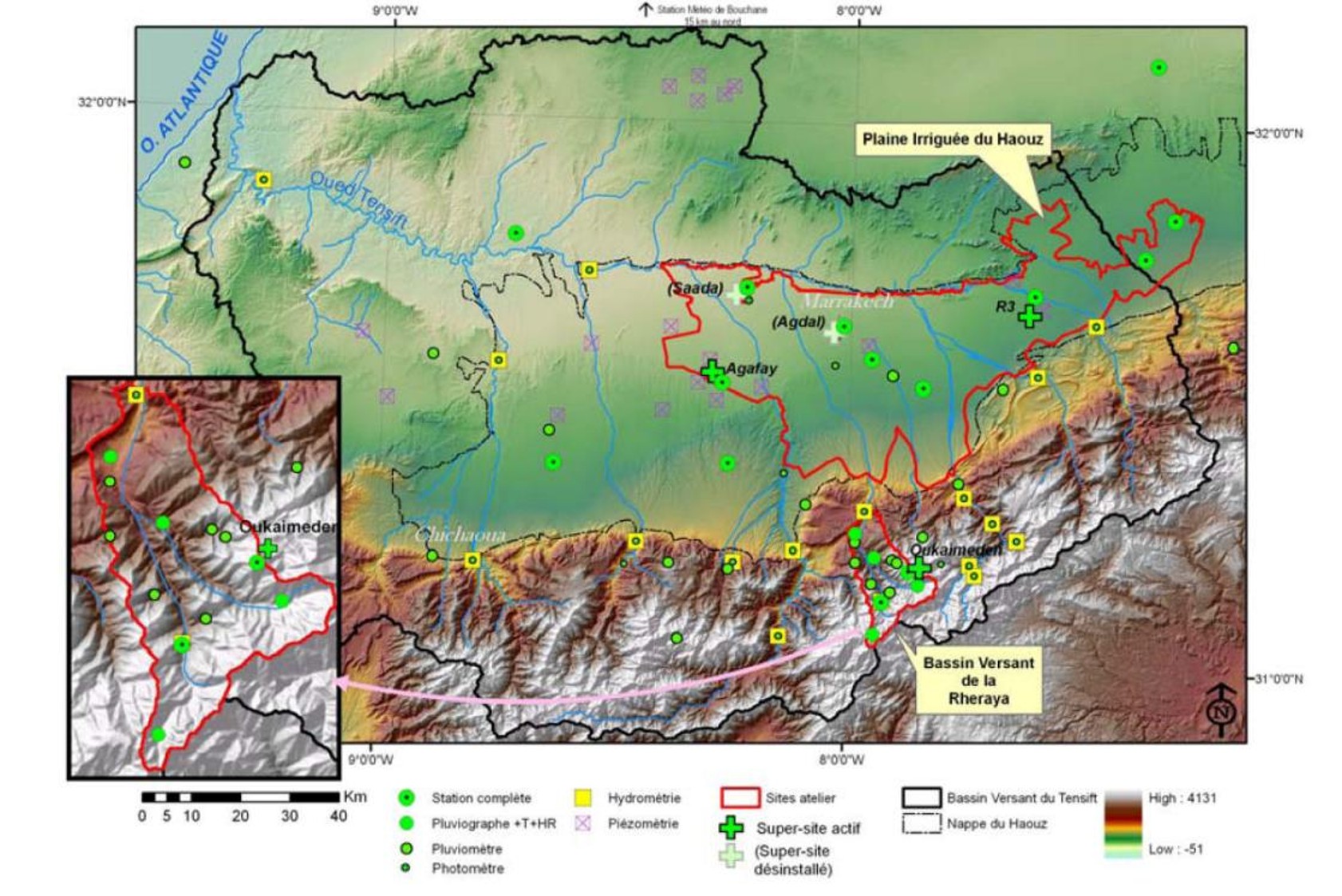
Location and Hydrological Context

  • Country: Morocco

  • Basin: Tensift River Basin

  • Climate: Semi-arid

The basin includes contrasted hydrological zones:

The AQUEDUCT project includes 7 sites, where accounting tools and methods will be designed, tested and implemented:

  • Southern High Atlas Mountains: Main water production area with high elevations, significant rainfall, and active surface hydrology (N’Fis, Ourika, Rheraya, Zat, R’dat sub-basins).

  • Central Haouz Plain: Dominated by groundwater flow, dense irrigation networks (seguias and khettaras), and major agricultural water consumption.

  • Northern Jbilet Massif: Low elevations with limited surface hydrology, mainly episodic runoff during rainfall events.

Spatial Scales Covered

The Tensift study site operates across several spatial scales:

  • Whole plain: ~5,000 km²

  • Mountain sub-watershed: Rheraya (~228 km²)

  • Irrigated perimeters: R3 (~50 km²)

  • Instrumented plots: ~2–5 ha

This multi-scale configuration supports water accounting from plot to basin level.

Exploring Regional Water Challenges

Monitoring Infrastructure

  • Approximately 12 meteorological stations measuring temperature, wind, humidity, radiation, and precipitation

  • Crop flux stations with 2–3 field campaigns per year

  • Runoff, piezometry, and irrigation monitoring, in collaboration with local water managers (ABHT, ORMVAH)

  • AERONET photometer for atmospheric observations

  • Groundwater monitoring networks

  • Cosmic Ray Neutron Sensing for soil moisture estimation

  • SAR C-band remote sensing data