Study Sites

AQUEDUCT Study Site – Lebna Watershed (Tunisia)

The Lebna Watershed is a representative Mediterranean catchment located in northeastern Tunisia. It combines rainfed agricultural systems, arboriculture, and irrigated downstream areas influenced by dam-regulated water delivery. Within the AQUEDUCT project, the site supports integrated water accounting, crop monitoring, and modeling activities across field and catchment scales.
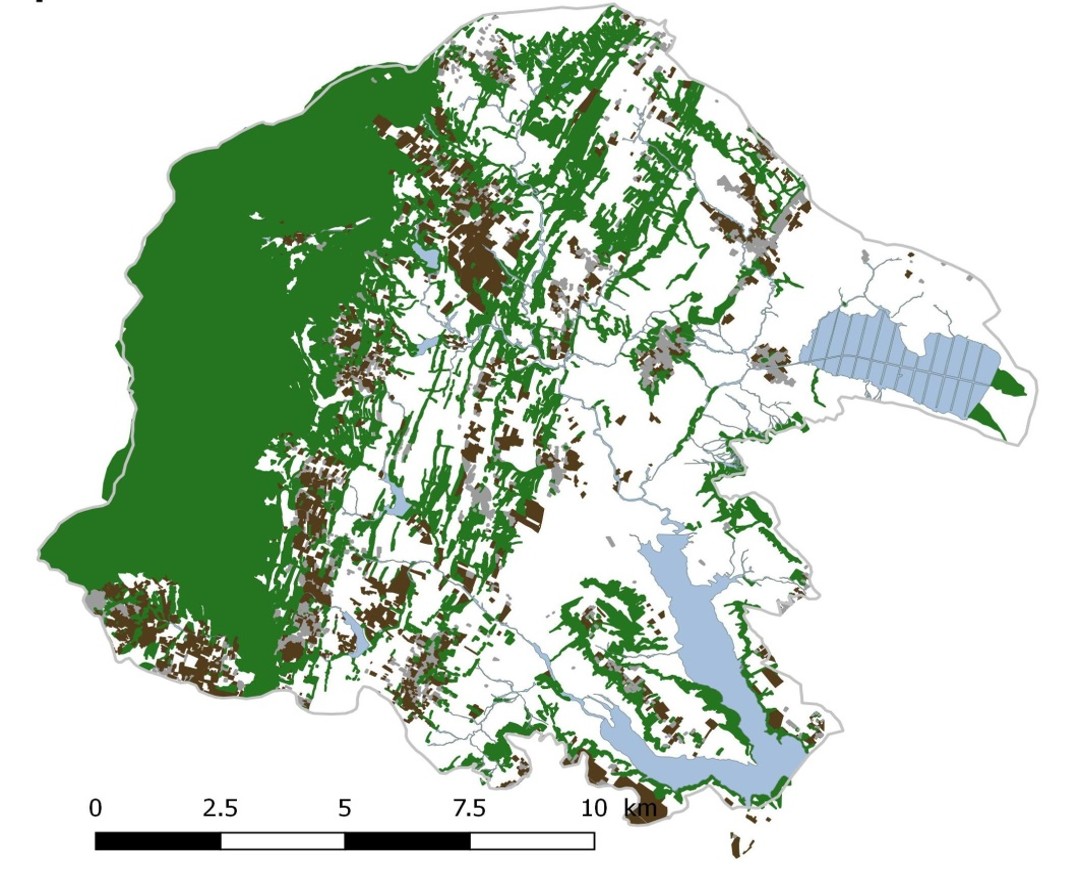
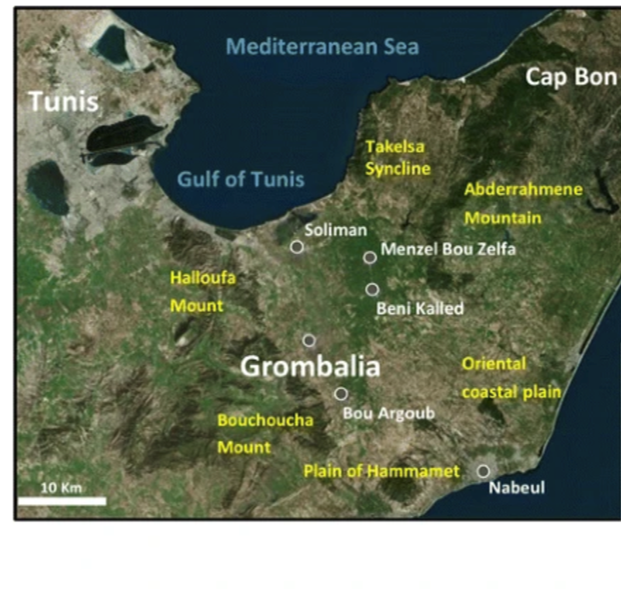
Location and Physical Characteristics

  • Country: Tunisia

  • Region: Cap Bon / NE Tunisia

  • Watershed area: 210 km²

  • Climate: Semi-arid to sub-humid

  • Topography: Hilly and plain areas

  • Soils: Diverse soil types

Climate Conditions

  • Annual rainfall: 500–650 mm/year (average ~512 mm)

  • Reference evapotranspiration (ET₀): ~1,200 mm/year

The gap between rainfall and evapotranspiration reflects significant seasonal water stress typical of Mediterranean environments.

Land Use and Agricultural Systems

Rainfed annual crops (49% of the area)
  • Wheat

  • Forage crops

  • Spices and legumes

Arboriculture and horticulture (Grombalia Plain, 720 km²)
  • Citrus (representing 82% of national production)

  • Vineyards

  • Olives

The Lebna Dam regulates downstream water delivery and influences irrigation dynamics.

Observation and Monitoring

The site integrates multi-scale observation systems at both field and catchment levels:
  • Crop type mapping

  • NDVI and LAI monitoring

  • Remote sensing

  • Field surveys for agroforestry characterization

  • Soil moisture monitoring (sensors and field campaigns)

  • Crop biomass, crop cover, phenology, and yield measurements

  • Evapotranspiration monitoring (eddy covariance systems)

Experimental and Modeling Approaches

Field-Level Modeling

  • SWAT model parameterization and calibration for fodder crop mixtures

  • Prediction of crop parameter values for SWAT crop databases

  • BisWAT model implementation for agroforestry systems (citrus with fodder crop mixtures)

  • HYDRUS model applications for soil-water processes

Catchment-Level Modeling

Integrated modeling frameworks support distributed hydrological and agro-hydrological analysis.

Participatory and Landscape Approach

The Lebna study site includes a participatory dimension aimed at:

  • Supporting farmers affected by water shortages and climate change

  • Facilitating transition toward sustainable and efficient practices

  • Identifying stakeholder interest in quantified water accounting information

  • Promoting technologies for monitoring soil water status and crop growth

Role within the AQUEDUCT Project

Within AQUEDUCT, the Lebna Watershed contributes to:

  • Integrated water accounting at field and catchment scale

  • Evaluation of irrigation and rainfed agricultural systems

  • Development of modeling-based decision-support tools

  • Bridging scientific tools with farmer-oriented adaptation strategies