Study Sites

AQUEDUCT Study Site – Kamech Catchment (Tunisia)

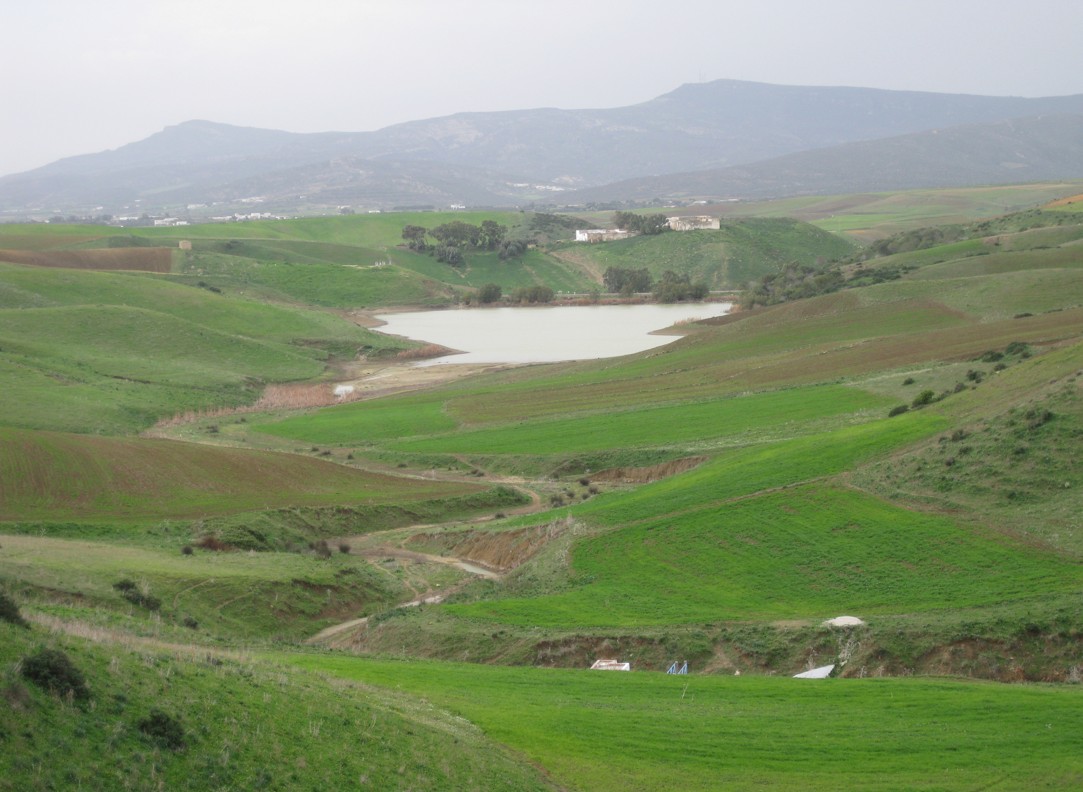
The Kamech Catchment is a long-term agrohydrological observatory located in the Cap Bon region of Tunisia. It represents a small Mediterranean agricultural watershed characterized by rainfed farming systems and hilly topography. The site plays a key role within the AQUEDUCT project as a reference catchment for distributed hydrological modeling and water balance assessment.
Location and Physical Characteristics

The AQUEDUCT project includes 7 sites, where accounting tools and methods will be designed, tested and implemented:

  • Country: Tunisia

  • Region: Cap Bon

  • Catchment area: 2.65 km²

  • Relief: Hilly landscape

  • Soil type: Clay soil over sandstone/mudstone

  • Land use: Mainly rainfed agriculture, subsistence farming

Climate Conditions

  • Average annual rainfall (RR): 645 mm

  • Reference evapotranspiration (ET₀): 1,366 mm

The significant difference between rainfall and evapotranspiration highlights structural water deficit conditions typical of Mediterranean semi-arid environments.

Long-Term Observatory

  • The Kamech catchment has been monitored since 1992, making it one of the longest-running agrohydrological observatories in the region.

  • It is part of the French national network of critical zone observatories, supporting long-term research on soil–water–vegetation interactions.

Key reference:

Molénat et al., 2018, Vadose Zone Journal

Modeling Approach

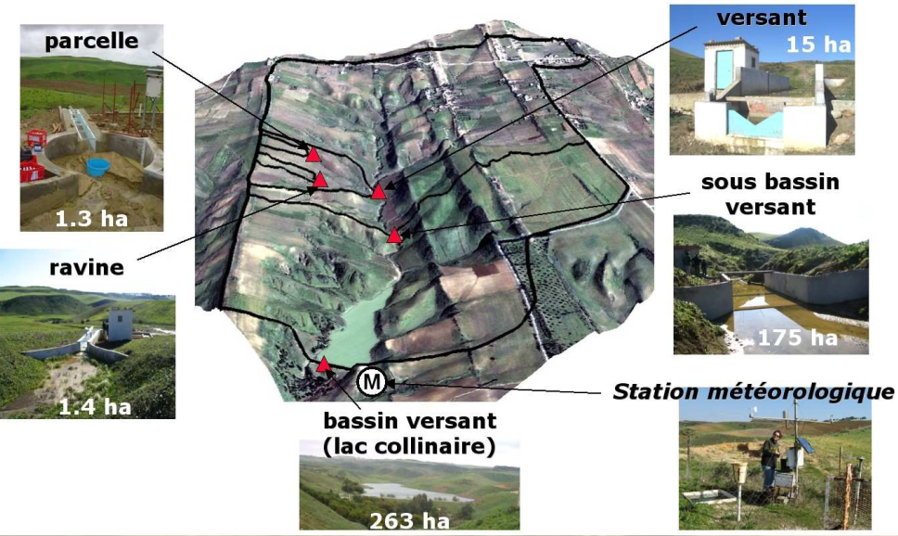
The site strongly relies on the MHYDAS model (Distributed Hydrological Model of Agroecosystems), a predominantly mechanistic model designed to simulate hydrological processes in agricultural catchments.

Key references include:
  • Moussa et al., 2002 (Hydrological Processes)

  • Gumière et al., 2011 (Hydrological Processes)

  • Lebon et al., 2021 (Environmental Modelling & Software)

Modeling Approach

The site strongly relies on the MHYDAS model (Distributed Hydrological Model of Agroecosystems), a predominantly mechanistic model designed to simulate hydrological processes in agricultural catchments.

Key references include:

  • Moussa et al., 2002 (Hydrological Processes)

  • Gumière et al., 2011 (Hydrological Processes)

  • Lebon et al., 2021 (Environmental Modelling & Software)

Model Structure and Components

The modeling framework includes:

  • Distributed numerical representation of the catchment

  • Surface runoff processes

  • Soil water dynamics

  • Agroecosystem hydrology

The mechanistic structure of the model enables detailed simulation of water fluxes at plot and catchment scale.

Role within the AQUEDUCT Project

Within AQUEDUCT, the Kamech catchment contributes to:

  • High-resolution distributed water balance analysis

  • Validation of hydrological modeling tools

  • Assessment of agricultural water dynamics in rainfed systems

  • Development of decision-support tools for small Mediterranean catchments